How IoT revolutionize Agriculture Industry?
How IoT revolutionize Agriculture Industry?
As technology continues to advance, it has become essential in every aspect of our lives. One industry that is embracing the power of technology like never before is agriculture. With the help of IoT (Internet of Things), farmers can now get real-time information about their crops and livestock, enabling them to make informed decisions that lead to improved yields and better profits.
In this blog post, we will explore how IoT is revolutionizing the agriculture industry and changing the way we produce food for a growing population. So sit back, grab a cup of coffee, and let's dive into this exciting topic!
What is IoT?
IoT, or the Internet of Things, is a term that refers to a network of physical objects connected to the internet. These objects could be anything from sensors and cameras to machines and devices.
The main purpose of IoT is to enable these objects to communicate with each other and exchange data in real-time. This allows for more efficient processes, better decision-making capabilities, and increased automation.
One key feature of IoT is its ability to collect vast amounts of data from various sources. This data can then be analyzed using advanced algorithms and used to make informed decisions about everything from crop management in agriculture to inventory control in retail.
Another important aspect of IoT is its connectivity. By connecting previously isolated devices, businesses can create new opportunities for innovation and efficiency gains that were not possible before.
IoT has the potential to revolutionize many industries by providing greater insights into operations and enabling more automated processes.
How IoT Affects Agriculture Industry?
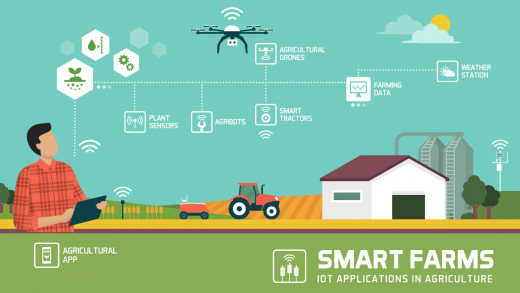
The Internet of Things (IoT) is a game-changer in the agriculture industry, providing farmers with real-time data, insights and control over their operations. By embedding sensors into soil, crops and farm equipment, IoT enables precision farming that can boost productivity and reduce waste.
One major way that IoT affects agriculture is by optimizing crop growth through monitoring environmental factors like temperature, humidity and soil moisture. With this information at hand, farmers can adjust irrigation systems accordingly to provide the optimal conditions for plant growth. This not only saves water but also helps increase yield.
IoT also allows for more efficient use of resources such as fertilizers and pesticides by enabling targeted application based on specific areas or even individual plants within a field. Furthermore, IoT-enabled machinery provides predictive maintenance alerts to avoid costly breakdowns during critical times like harvest season.
However, there are challenges that come along with implementing IoT in agriculture such as high costs associated with installation and maintenance of technology infrastructure. Nonetheless, despite these challenges it's clear that IoT has immense potential to revolutionize the agriculture industry both now and in the future.
The Pros and Cons of IoT in Agriculture
IoT technology has a significant impact on the agriculture industry, but like any other technology, it comes with its pros and cons.
On the positive side, IoT can help farmers monitor their crops' growth continuously. With sensors installed in fields, they can collect data about soil moisture, temperature, and humidity levels. This information allows for better crop management decisions and helps farmers optimize water usage.
Moreover, IoT can also improve livestock farming practices by monitoring animal health conditions through wearable devices that track vital signs such as heart rate or body temperature.
However, there are also some downsides to the use of IoT in agriculture. One potential drawback is that small-scale farmers may face difficulties adopting this technology due to its high costs and complex setup process.
Additionally, using connected devices might raise concerns around privacy issues since data collected from farms could potentially fall into the wrong hands if not secured correctly.
While there are both advantages and disadvantages to incorporating IoT into agriculture practices - it's clear that many benefits exist when implemented properly without sacrificing security or consumer safety!
The Future of IoT in Agriculture
The future of IoT in agriculture is promising as it has already shown its potential to revolutionize the industry. Farmers can expect more advancements and innovations that will optimize their productivity, profitability, and sustainability.
One of the key areas where IoT technology will have a significant impact is precision farming. With advanced sensors and analytics platforms, farmers can monitor their crops' health status, soil moisture levels, temperature changes, and other critical variables in real-time. These insights enable them to make data-driven decisions that enhance crop yields while reducing input costs.
Another exciting development is the integration of AI with IoT devices used in agriculture. This combination creates intelligent machines capable of predicting weather patterns or detecting pests before they cause damage to crops. Such technologies help farmers take proactive measures to prevent losses rather than reactively managing problems after they occur.
IoT also offers new opportunities for sustainable farming practices by enabling efficient use of resources such as water and fertilizer through smart irrigation systems that only apply water when needed or autonomous drones that spray precise amounts of fertilizer on crops based on need.
IoT's future in agriculture looks bright as it continually evolves into more sophisticated solutions for farmers around the world aiming towards sustained food production while taking care of natural resources like land and water bodies adequately.
In conclusion, the Internet of Things has undoubtedly transformed the agriculture industry in numerous ways. From enhancing crop yields to reducing water wastage and optimizing resources, IoT has made farming more sustainable and profitable than ever before. However, with every technological advancement comes its own set of challenges such as data privacy concerns and cybersecurity issues.
Despite these challenges, it is clear that IoT will play a critical role in shaping the future of agriculture. As farmers continue to face new obstacles such as climate change and resource scarcity, they need all the help they can get. And this is where IoT technology comes into play - by offering precision agriculture solutions that enable farmers to make data-driven decisions for better outcomes.
We can expect to see even greater adoption of IoT technology among farmers in the coming years as they seek ways to improve their efficiency while minimizing environmental impact. With more investment in research and development, we may witness an even higher level of innovation within this space that could revolutionize not just how we grow our food but also how it gets distributed across borders globally.

Comments
Post a Comment